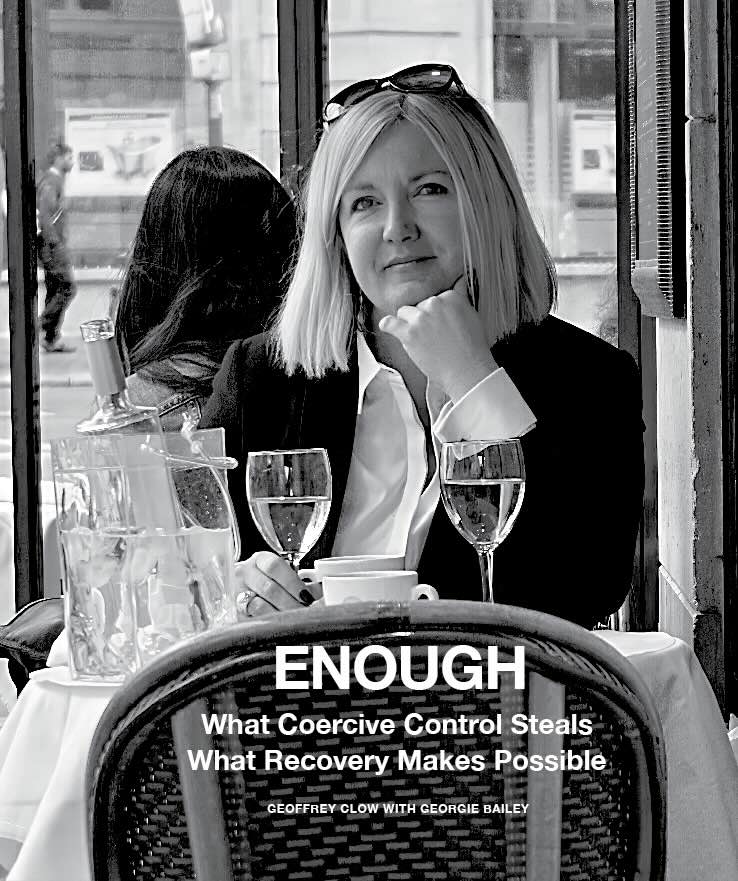
ENOUGH:
WHAT COERCIVE CONTROL STEALS
WHAT RECOVERY MAKES POSSIBLE
Coercive control and narcissistic abuse aren’t “communication problems”. They are psychological torture, a system of power designed to dismantle you piece by piece, by someone who claims to love you.
It doesn’t kick down the door screaming. It brings you flowers. It says, “I’m just trying to take care of you.” Before you know it, the flowers are wilted, the door is locked from the outside, and you can’t remember the last time you made a choice that wasn’t pre-approved.
From the outside, everyone sees devotion. From the inside, it’s demolition.
ENOUGH: What Coercive Control Steals. What Recovery Makes Possible is a survivor-centred book about coercive control, trauma, and recovery, grounded in lived experience.
Recovery isn’t about going back to who you were. It’s about becoming who they never let you be.
“Groundbreaking, survivor-first, and profoundly validating. These words stay with you long after you’ve closed the book.”
“This is trauma-informed writing at its most precise. Trauma lives in the body, not just in narrative memory. Recovery happens when someone can locate the feeling physically before they need to explain it cognitively.”
“Quietly revolutionary, it doesn’t just restore intuition; it redeems your relationship with your own body. Every sentence hums with recognition and integrity.”
Availability
Available Now: Digital Edition: Amazon, Booktopia, Indigo, Google Books, Kobo. Audiobook: Google Play
Available Now: Paperback and Hardback Editions (over 100 practical steps, 700 pages). Available through Amazon, Barns & Noble, Booktopia, Waterstones (UK), Books-A-Million, Bookshop.org, Fishpond, and major booksellers worldwide. Plus libraries and wholesalers (like Baker & Taylor, Gardners, OverDrive, etc.).
- The book is held by the National Library of Australia
→ Read an Exclusive Interview With Geoffrey Clow, Author of Enough: What Coercive Control Steals, What Recovery Makes Possible. The trauma-informed counsellor and author opens up about love, loss, and the making of a survivor’s lifeline by Emma Hartley