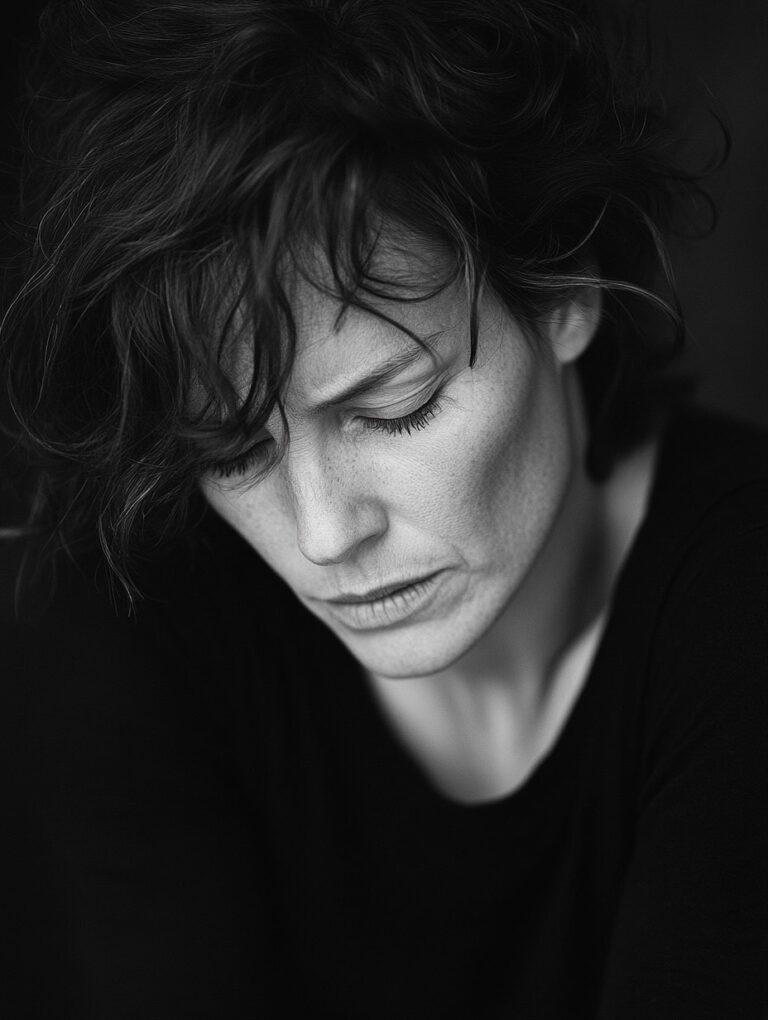
Today, on the official launch of our book, I’m sharing three pieces from ENOUGH: What Coercive Control Steals. What Recovery Makes Possible that sit side by side. The Preface. Georgie’s writing on the reality of domestic abuse. And the piece where she turns toward the future, naming the joy and freedom she reclaimed.
A Note From Geoffrey Clow
On Georgie’s heavenly birthday, I want you to hear her.
In her own words.
From her part of our book she wrote quietly, privately, without telling anyone.
A few weeks after she died, I was taking care if her things, just trying to keep myself upright, when I found a small document on her laptop titled Never Too Late. I opened it thinking it might be a fragment, or a few paragraphs. It wasn’t. It was a small book. Her book. Her life in pages. The neglect. The violence. The decades of coercive control that nearly erased her. And the part people don’t expect, the love story we built together, the return of her voice, the rediscovery of her truth after a lifetime of being told she wasn’t allowed one.
Finding it broke me open.
It was stunning.
And unbearable.
Around that time I kept feeling her everywhere, in ways that made me wonder if grief really can bend reality. I spoke to someone who knew nothing about her, nothing about us, nothing about her death. Over the phone she described Georgie, described our home, described details she could not possibly have known, and then said one sentence that froze me:
“She’s written a book. She wants you to take it to the world.”
I didn’t know whether to drop the phone or run.
But that sentence wouldn’t leave me.
I showed what she wrote to a few editors. Every one of them said the same thing:
It was extraordinary.
It was important.
It needed a front half.
It needed the context of coercive control.
It needed someone to build the scaffolding so Georgie’s voice could be fully understood.
I couldn’t do it. Not then. The grief was too loud.
But in March 2025, something shifted.
I sat down, opened a blank page, and started writing.
And I didn’t stop.
Six months later, ENOUGH: What Coercive Control Steals. What Recovery Makes Possible existed, her voice and mine, interwoven. Her story in full. Her insight. Her courage. Her truth. And the clarity survivors around the world have waited far too long to hear.
People tell me it’s powerful.
People tell me it’s unlike anything else.
People tell me it will help.
I hope they’re right.
What I know for sure is this:
Georgie didn’t just survive for many years. She came back to herself. She reclaimed every part of her that had been taken. And she wanted other survivors to know it wasn’t too late for them either.
So today, on her birthday, 30 November, I want to start with her.
This is the first page of her voice, the opening to the part of the book she wrote herself.
The part that survived.
The part that spoke back.
This is Georgie.
In her own words.
On her birthday.
Happy heavenly birthday, my love. We did it. xxoo
Before You Read Georgie’s Words, Here’s Why They Matter
ENOUGH:
What Coercive Control Steals
What Recovery Makes Possible
Preface
“I was looked at, but I wasn’t seen.”
~ Albert Camus
Her name was Georgie Bailey (née Booker). For decades, she was invisible. She survived forty years of abuse, childhood neglect, a violent first marriage, and then twenty-two years of coercive control that almost finished what the others started.
Georgie called those years her frog pot period. You know the story: drop a frog in boiling water, it jumps out. Drop it in lukewarm water and heat it slowly, it dies without noticing. That’s coercive control. It doesn’t kick down the door screaming. It brings you flowers. It says, “I’m just trying to take care of you.” And before you know it, the flowers are wilted, the door is locked from the outside, and you can’t remember the last time you made a choice that wasn’t pre-approved.
That’s the brilliance, and the horror, of coercive control. It isn’t a rough patch or two strong personalities clashing. It’s a system, a deliberate pattern with one aim: to dismantle the other person. It is psychological torture carried out by someone claiming to love you. That’s the magic trick. Everyone else sees devotion. Inside, it’s demolition.
By the time I met Georgie, she was forty-five and technically “free.” She was still startled at sounds, still asking permission to order food, still learning she was allowed to pick the colour of the bloody towels.
She wrote, too. Poetry. Fragments. Then the whole story: Never Too Late. Complete. Neglect. Violence. Erasure. Escape. Recovery. Joy. She never told me she’d finished it. Maybe after decades of being told her words meant nothing, she couldn’t believe they mattered. But there it was.
Proof that someone can disappear and still return. Proof that forty years of abuse doesn’t have to be the ending.
This book begins with Georgie. And it ends with her, too. The first thirteen parts are what we unpacked together: how coercive control works, what it steals, and how you claw your way back. The final part is Georgie’s gift, her story, in her own words.
Who’s it for? First, survivors. Because they deserve more than hashtags and hollow sympathy. Their reality deserves to be named. It’s also for the people who orbit them: parents asking why she stayed, new partners baffled by the aftermath.
And yes, it’s for the suits in courtrooms and uniforms on the beat. Judges, lawyers, police. The ones who still confuse psychological torture with “a difficult marriage.” If you want to know what this crime actually looks like, the patterns, the damage, the way it erases a person, this book will save you the trouble of pretending you don’t.
And Georgie didn’t just survive. She learned to live again. To travel, to paint, to cook, to love without apology. Even when illness came for her, even when she had to fight one more battle she didn’t choose, she carried the same courage, humour, and refusal to be erased into that fight too. She wanted you to know: even after everything, joy is still possible.
This book tells the truth, plain. Coercive control is psychological torture. It starts off as care, but its aim is your destruction. Recovery is brutal. And possible.
Even when you think you’re gone.
Even after decades.
Even when you can’t remember who you were before.
Especially then. Because at some point, you stop excusing. You stop minimising. You stop accepting the wilted apology flowers and believing the lies. You finally say the word that should have ended it the first time someone tried to erase you.
Enough.
Chapter: 14.15: Thoughts on Domestic Abuse By Georgie Bailey
I wrote this short book initially to get all the emotional mess out of my head and heart and onto paper. It was a way for me to close a difficult chapter and express the evolution of a new one.
Writing has become a peaceful place where I can be completely honest with myself. I was taken by surprise when poetry began to flow. I believe it was part of the healing process and a way for me to always remember the kaleidoscope of emotions I felt as I moved from being very disconnected from myself—standing on the outside looking in— to coming to realise that the joy I observed and wondered at actually belonged to me and it was okay to let myself feel it.
I decided to share my inner thoughts for a couple of reasons. Firstly, I touch lightly on the layers of abuse in my life, some of which clearly and obviously fall into the category of domestic abuse. I am grateful to see light being shone on domestic abuse these days, but much of the discussion seems to focus on the word “violence”. I wanted to specifically touch on the fact that abuse is not just physical violence and that violence is to violate, which might not necessarily involve the laying on of hands.
Domestic violence also includes the following: exerting control, coercion, any form of bullying, humiliation, criticism and isolating the individual from their friends and family. Here are some examples of how these may manifest practically:
– controlling a person’s finances money or credit cards.
– making a person account for every penny they spend.
– only allowing basic necessities (food, clothes, medications, shelter).
– limiting a person to an allowance.
– preventing a person from working or choosing their own career.
– sabotaging a person’s job (making them miss work, calling constantly, bullying them into doing things other than their job so they are unable to meet work commitments)
– stealing from a person or taking their money.
– Judging or criticising everything a person does.
– Down playing a person’s achievements.
– Gaslighting – make a person question or doubt themself.
All these things are indeed abuse, and all these things I experienced with the excuse being, “It’s not abuse, I never touched you.”
Now, however, I want to focus on the joy of possibility. The possibility of newness, of finding a peaceful space to know oneself.
It’s never too late to start again and move through the confusion, confrontation and disbelief.
As the great English novelist, George Eliot said, “It’s never too late to be what you might have been.”
Chapter 14.17 Everyone Has a Chance to Live True
I have so much to appreciate and be grateful for. I am particularly grateful for my two amazing kids who have each found their own happiness. They have a loving extended family and have gone on to build a good relationship with their dad. Leaving that home was the opportunity for them to start a new way with him, one without him in position of daily oversight of their lives. Another great testament to the power of forgiveness, and I’m happy to say that we do still laugh about some things.
I’m grateful for finding a place of peace and love with my dad. His toughness has mellowed and I understand as an adult that his intentions as a father were good, just misguided. My relationship with my mother was probably more toxic than anything as a child. After a long and sad battle with alcoholism and ultimately disfiguring cancer, she finally passed away, finding her peace and giving her children theirs. Her burial plaque reads: Peace at last the restless soul.
I’m deeply grateful for my grandmother who is still with me in spirit every day. A teacher in so many ways.
I’m very grateful to my little brother, we have seen each other through tricky times. I know he’s always there unconditionally for me.
I’m grateful to the frog pot cook’s family. I realise that their generosity, particularly that of my parents-in-law, got me through many difficult times.
And in turning the corner to the future, I’m so grateful to have found the love of my life, my teacher, my best friend, my travel companion, my rock. He has gently taken my hand and dragged me into the 21st century, encouraging and seeking out the real essence of me. Loving me and challenging me as I have worked through the initial struggle of believing I count, that I deserve to live a fabulous life.
While the surrounding narrative in this story serves to highlight domestic abuse as a place I have lived, the aspirational true story is our love – the knowledge that everyone has a chance to live true, to really live life out loud.
I look forward to every next chapter in our wild and wonderful adventure together.
~ Georgie Bailey
Georgie Bailey was a consultant, writer, advocate, and survivor whose lived experience of coercive control and rare disease shaped her work. Her words, grounded in honesty and resilience, continue to guide and empower others through her legacy in ENOUGH: What Coercive Control Steals. What Recovery Makes Possible.