Trauma Recovery Begins Where You Are

This is for the ones trying to recover from trauma without the luxury of self-belief

The ones who wake already tired, scanning the room before their feet hit the floor. Who’ve heard “just love yourself first” and thought, I’m doing well just to survive myself. If that’s you, if belief feels like a language you never learned, start smaller. You don’t need belief to begin. You just need one moment where you don’t walk away from yourself.


You Start in the Rubble

Trauma doesn’t reset you. It leaves you standing in the wreckage, surrounded by half-finished meals, unopened mail, clothes you meant to fold weeks ago. You start where you are, not with affirmations, but with a pulse. You eat what you can reach. You wash one plate. You breathe through the shame of still being here.

Each small act sends a signal down through bone and muscle: We’re not gone. The body, which has been braced for years, starts to listen, softening like a fist uncurling finger by finger. At first, the calm feels foreign,  suspicious even, but you keep moving, slow and shaky, until stillness stops feeling like danger And that’s the bridge: tiny movements of care that start to shift the body before the mind can catch up.


The Body Believes Before the Mind

You can’t think your way into recovery; your mind has been trained to doubt itself. But your soul, that ancient witness, knows the truth. It knows the difference between holding your breath to stay invisible and exhaling because no one’s shouting. It knows how your ribs ache after nights spent tensing for footsteps. It knows the way your skin prickles when someone raises their voice, even when the words are kind.

A woman once told me she didn’t start healing with hope, she started with habit. “I couldn’t say one nice thing about myself,” she said, “so I stopped trying to believe anything. Instead, I made tea every morning at the same time. No affirmations. Just tea. I think my body needed to know that someone, even a shaky, half-numb version of me, would still show up.”

She paused, tracing the rim of her mug. “After a few months, the tea didn’t taste like survival anymore. It just tasted like morning.”


You Build Trust, Not Faith

The world keeps telling you to believe in yourself. But belief is a leap, and trauma taught you that leaps are dangerous. So you build proof instead. One quiet act at a time. Drink the water. Delete their number. Close the laptop when your eyes start to sting. Each small decision steadies your heartbeat. Each follow-through whispers to your nervous system: I keep my promises now.

That’s what self-trust feels like, not fireworks, but the slow unclenching of fists. The shoulders lowering a fraction closer to rest. The breath that doesn’t catch when you hear your name.

And it’s in these small moments of embodied self-care that you begin to build the evidence of your own reliability. This trust is not built in grand gestures, but in the accumulation of micro-choices.


Practical Step

At the end of the day, name one thing your body did to protect or support you, even if it was small.

I rested.

I didn’t answer the message.

I ate something warm.

Write it down. That list is not trivial, it’s evidence of life continuing.


Why It Matters:

Because the body keeps score, but it also keeps proof. Every small act of staying is how you rewrite the story.


If You Remember One Thing

You don’t have to believe in yourself yet. You just have to stop disappearing on yourself. Recovery begins with the breath you didn’t know you were holding. With the plate you wash instead of leaving. With the moment your body realises it’s safe to exhale. Start where you are. Trust the next micro choice. Belief will come,  quietly, steadily, the way morning light returns after a long night.


You can’t out-logic trauma

You can understand it, name it, read every book….but until your body feels safe again, recovery doesn’t stick.

I’m Geoffrey Clow, trauma-informed counsellor and author of Enough: What Coercive Control Steals. What Recovery Makes Possible.

I’ve lived this work from the inside out. I know what it’s like to white-knuckle through survival, to try every method that promised peace, and to learn……slowly…….what actually helps a nervous system settle.

Trauma recovery isn’t a single method. It’s a process of returning to yourself…..through small, practical, body-based tools that meet you where you are.

It’s about learning safety, not perfection. Presence, not performance.

If you’re ready to start working with your body instead of against it, explore Trauma Recovery Counselling to see what this work can look like for you.

Request an online one-on-one session or learn more about my support services.



more insights

Solid blue background with no details. Author perspective background for Twinkling of the Soul

What Family Court Does to a Person

If family court has made you feel flattened, unreal, or split from the person you were before the proceedings started, this is about what that process does. The waiting that nobody warns you about. The strangers who handle your worst experience as a file. The legal language that strips the heat from your own story. The months between hearings that your body keeps score of. And the quiet, unseen work of holding onto yourself while a system processes you.

Read more >
Solid coral background used for Trauma Recovery Counselling pages, symbolising warmth, calm support, and grounded safety

The Person With No Edges

She is the first to offer and the last to leave. She does not say no. This is not because she is unable to form the word. It is because the word, in her internal architecture, is wired to a consequence that predates her adult life. No, in the house she grew up in, did not mean no. It meant the particular kind of parental coldness that a child experiences not as disagreement but as annihilation.

Read more >
Solid pink background, no other elements. Author perspective background for Twinkling of the Soul

The Part of You That Dies With Them

You still buy two avocados. It has been eight months and you are standing in the supermarket on a Thursday evening and you have put two avocados in the bag. You will not realise until you get home. The second avocado was not a mistake. It was a reflex. The hand remembering what the mind has been told but the body has not yet agreed to, which is that the person who ate the other avocado is not coming home.

Read more >
Solid coral background used for Trauma Recovery Counselling pages, symbolising warmth, calm support, and grounded safety

Trauma Literacy Matters

The teacher calls the mother in on a Wednesday. The boy has been hitting other children, hiding under desks, screaming when touched. The teacher uses words like “defiance” and “escalation.” The mother does not explain what the house was like before his father left. The meeting ends. The boy stays on red. This is what trauma illiteracy looks like. Not cruelty. Not indifference. Just a room full of people who are looking directly at the thing and cannot see it.

Read more >
Solid orange background colour. Author perspective background for Twinkling of the Soul

Addiction Is an Attempt to Silence Shame

There is a man at a dinner party and he is on his third glass of wine before the entrée has arrived. No one mentions it, because no one mentions it. He is not thinking about alcohol. He is thinking about the moment, perhaps forty minutes from now, when the conversation will thin out and there is nothing between him and the quiet. Addiction is not a pleasure problem. It is a pain problem. And you cannot punish someone out of pain.

Read more >
Black and white portrait of person.

Poor Treatment, Not Poor Mental Health

Who hurt them? That’s the question I want to ask every time someone talks about “low mood” or “poor coping” as if distress just appears from nowhere. Most of the people I’ve worked with were not mysteriously unwell. They were reacting to something real. But we’ve learned to tell a tidier story. Call it “poor mental health” and nobody has to say “abuse.” That shift does real harm. Because when we stop at the label, when we never name the cause, we end up treating the smoke and ignoring the fire.

Read more >
Solid coral background used for Trauma Recovery Counselling pages, symbolising warmth, calm support, and grounded safety

What Trauma Survivors Know That Textbooks Miss

This article is about the expertise that doesn’t come with a certificate, the knowledge survivors of abuse and trauma develop at 3am, alone, with no manual. It explores the gap between studying trauma and living inside it, and makes a case for why what you’ve learned by staying alive deserves recognition. It’s written for people who’ve had to figure things out for themselves, those who’ve survived abuse, coercive control, childhood trauma, or neglect. Content includes references to suicidality and childhood trauma.

Read more >
Solid teal background with no text. Author perspective background for Twinkling of the Soul

What to Do When Your Employer Excludes You From Work

Workplace abuse doesn’t always come with shouting or threats. Sometimes it comes as silence: no emails, no meetings, no work, while you remain employed and expected to be grateful. This article explains workplace ostracism and systematic exclusion, why it causes real psychological harm, and what options exist when being paid to be invisible becomes the weapon.

Read more >
Black and white close-up portrait of a woman with a steady, direct gaze. Her expression is calm and present, neither smiling nor guarded. Lines on her face reflect lived experience. Soft natural light from a window.

What Trauma-Informed Support Actually Feels Like

If you search “trauma-informed” online, you’ll find a lot of content. Six principles. Posters. Policies. Gentle marketing copy. Academic reviews explaining that everyone defines it differently and measures it differently. None of it is useless. But most of it isn’t written for the person it’s meant to protect. In all of it, the survivor is discussed. The survivor is rarely the reader.
So this is written for the person who is sitting in the room, trying to work out whether they are safe. Not on paper. In their body.

Read more >
An older woman with grey hair gazes pensively into the distance, wrapped in a dark knit sweater, her expression reflecting quiet grief and contemplation.

Whose Deaths Matter Enough to Change the Law?

Fifteen people murdered at Bondi. A ten-year-old girl. A Holocaust survivor who died shielding his wife. Before the funerals were over, the machinery was locked in, protest bans, visa screening for beliefs, media monitoring, funding threats, the IHRA definition of antisemitism embedded across all levels of government. The concerns raised in July by Jewish Australians, civil liberties groups, and the man who actually wrote the definition were overridden. The attack didn’t create this agenda. It ended the debate. This piece documents what was built, who built it, and why it matters for every Australian, because when the state decides which grief counts, it eventually decides which voices don’t.

Read more >
A woman with shoulder-length hair stands turned away from the camera, her light clothing blending softly into a textured beige wall.

Grief Sharpens Against Banality

This isn’t an article about grief. Not really. It’s about what happens when that very special someone you loved is dead and you’re still here, and the love didn’t get the memo. It keeps showing up, in cars, in kitchens, at 2am, in the self-checkout queue at Woolies. Uninvited. Inconvenient. Sometimes unwelcome. If you’ve lost someone, you might recognise this. The presence that arrives without warning. The way your body knows something before your brain catches up. The cost of carrying it in public spaces while the world keeps demanding you function. This piece doesn’t explain grief or offer steps through it. It doesn’t try to comfort you or teach you anything. It just says: this is what it’s like.

Read more >
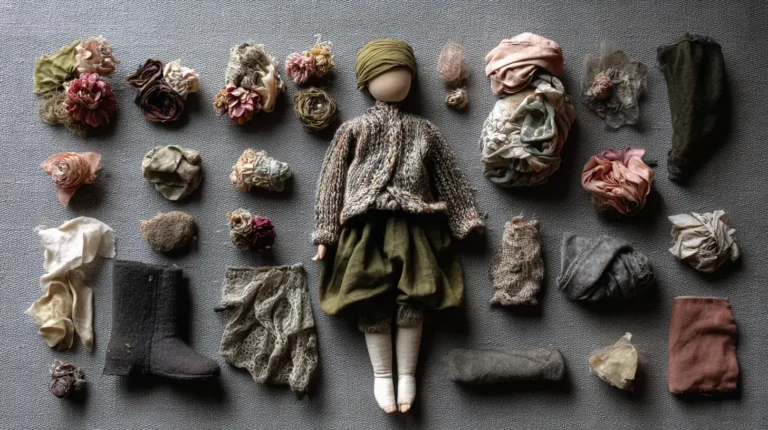
Handmade fabric doll with separated clothing and body parts laid out around it, representing trauma parts and survival responses.

What Therapists Mean by “Parts”

What therapists call “parts” isn’t fragmentation or pathology. It’s your nervous system running multiple survival strategies at once. This article translates parts work out of therapy-speak and into real, recognisable moments, and explains why understanding it this way can actually change how your body responds now.

Read more >